

Partner organizations
Co-investors:
● Fundação FEAC
● Instituto Arcor Brasil
Methodology developer and implementing partner:
● CoCriança

Territory / Region
Campinas, São Paulo, Brazil

Support Period
2025 – 2026
In 2025, Instituto Tecendo Infâncias supported the second edition of the Verdejando Escolas Project, in partnership with Fundação FEAC and Instituto Arcor Brasil. The initiative is developed by CoCriança and aims to transform schoolyards into living spaces integrated with nature, co-created based on children’s desires, needs, and perceptions. Through this process, schools are able to reimagine their physical and cultural environments, fostering free play in connection with nature, as well as promoting children’s health and well-being.
The project is implemented through the CoCriança Journey, a participatory methodology that places children at the center of territorial transformation, recognizing them as key agents in reshaping spaces and relationships. Structured around three pillars: children, spaces, and community, the methodology unfolds through six interconnected stages: training, recognizing, co-creating, designing, implementing, and building awareness. This approach integrates educational, architectural, and community dimensions, promoting collective co-creation processes that strengthen children’s autonomy, deepen educator engagement, and foster a sense of belonging within the school community.
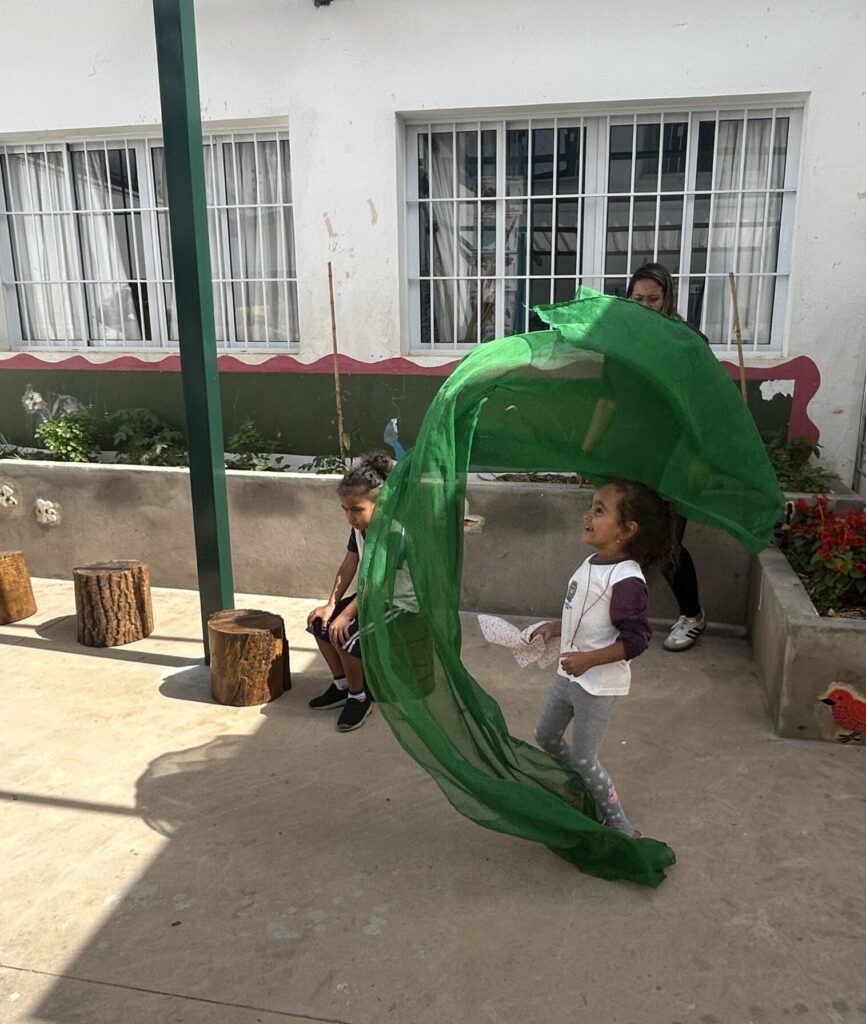
In this edition, six early childhood education centers affiliated with the Municipal Department of Education of Campinas (São Paulo) were selected to participate: Casa da Criança Meimei, Casa da Criança Vovô Nestor, Creche Tia Léa, Espaço Crescer e Vencer, Lar Escola Jesus de Nazaré, and Serviço Social da Paróquia São Paulo Apóstolo – SPES. The project directly involves 257 participants, including 141 children aged 4 to 6 and 116 educators, while also reaching an additional 1,180 individuals who engage daily with the six schools, including children and education professionals.
Throughout the process, families, school leaders, educators, and community representatives have been actively engaged, reinforcing the understanding that early childhood care is a shared responsibility among communities, schools, and public institutions. At the same time, project learnings have been documented, highlighting the positive impact of improved school environments on children’s development and educational experience.
In a context where children are increasingly disconnected from nature, initiatives that foster learning, sensory experiences, and physical engagement through contact with natural environments are essential. Reconnecting children with nature supports their holistic development in early childhood and contributes to the formation of environmental awareness, strengthening their understanding, from an early age, of the importance of caring for the environment.
The project also generates valuable insights for the field of strategic philanthropy, combining shared resources and governance to expand impact. The partnership between Instituto Tecendo Infâncias, Fundação FEAC, and Instituto Arcor Brasil is grounded in a collaborative philanthropy model, characterized by clear agreements, defined accountability, and ongoing dialogue among partner institutions. This collaboration has not only expanded the project’s reach but has also strengthened practices related to monitoring, transparency, and shared learning.
Through this initiative, the Institute amplifies CoCriança’s technical capacity and strengthens the potential for replicating this experience in other communities, creating a lasting legacy in the transformation of school environments.
The project remains in progress, with construction underway across all six schools and the inauguration of the new spaces expected in the first quarter of 2026.
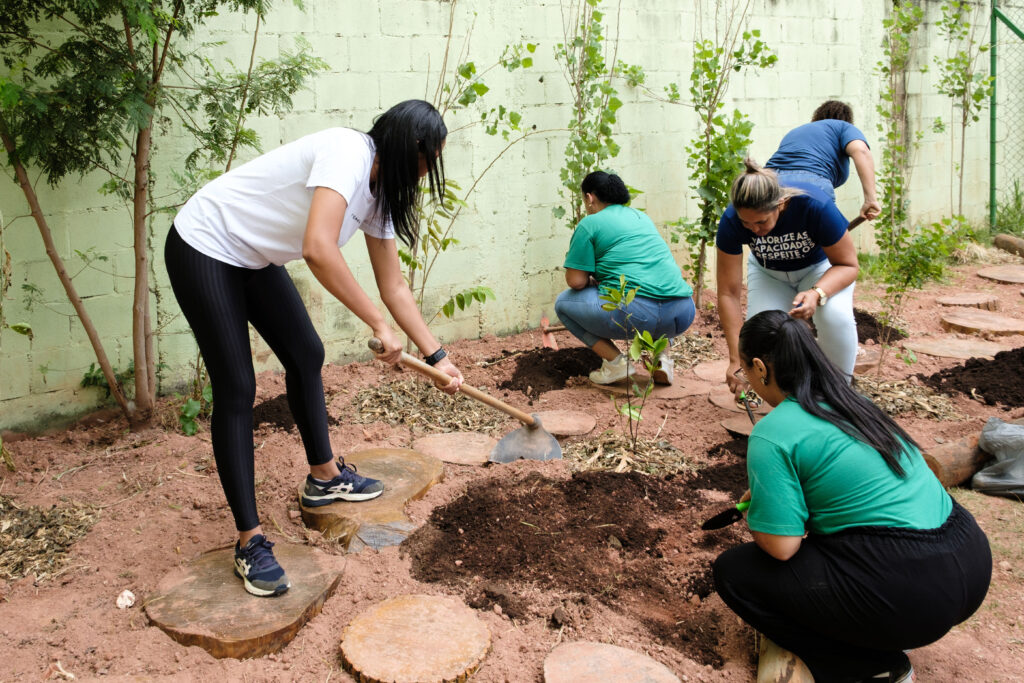
“I would like to say that Verdejando Escolas has enriched my understanding of childhood and strengthened the practices we are developing in our school. Expanding childhood experiences beyond classroom walls and reconnecting them with nature deeply aligns with our commitment to supporting the whole child.”
A teacher from one of the six schools participating in the second edition of Verdejando Escolas