We are a nonprofit family philanthropy institute dedicated to promoting the healthy and full development of children from pregnancy to age six, especially those growing up in vulnerable contexts.
Founded in 2022, we work strategically to strengthen local organizations, foster collaboration across sectors, and promote knowledge and practices that expand children’s rights and opportunities.
Guided by evidence and driven by care, we believe that every child deserves to grow up healthy, protected, and surrounded by opportunities that nurture their full potential.
The idea of creating Instituto Tecendo Infâncias emerged during the Covid-19 pandemic, when the couple Maíra Gazzola Schincariol and Adriano Schincariol, together with their children Laura and Lucas, decided to develop a project in their hometown, Itu, in the countryside of São Paulo, Their goal was to go beyond the emergency aid they were already providing and channel social investment in a structured way, capable of generating systemic impact in the medium and long term.
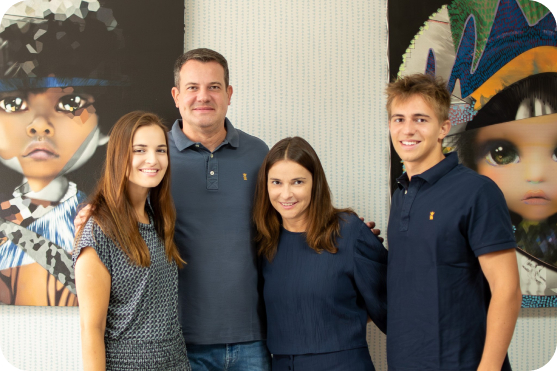
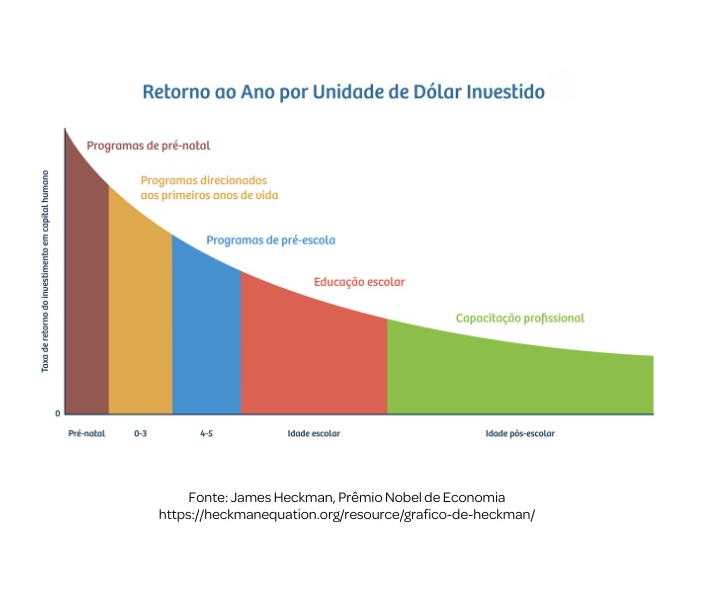
Maíra, Adriano, Laura and Lucas embarked on a journey into the third sector, connecting with experts, visiting projects and civil society organizations, and engaging with social entrepreneurs and family investors. Their decision to focus on early childhood was guided by strong scientific evidence showing its decisive role in reducing poverty and inequality.
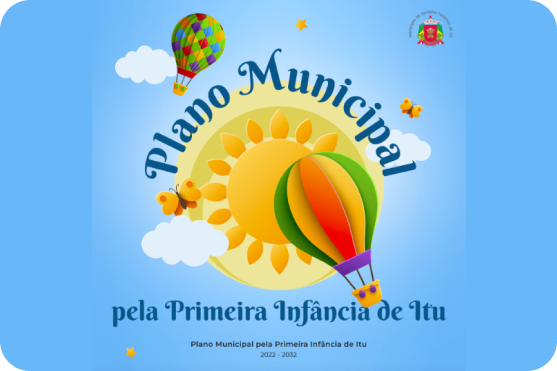
In January, Instituto Tecendo Infâncias was founded with the purpose of contributing to the development of children from pregnancy through age six, living in vulnerable contexts, ensuring they grow up with dignity, in environments rich in positive experiences that foster their development today and open the way to greater opportunities in the future. Later that year, the Institute signed a Technical Cooperation Agreement with the Municipality of Itu, which enabled the design and implementation of the Municipal Plan for Early Childhood (PMPI-Itu).
We revised our Theory of Change and expanded our work beyond Itu. We invested in projects in Alagoas and Ceará, strengthening the early childhood care network. A highlight, was the launch of the Cuidar Program in Itu, a public policy initiative providing integrated and multidisciplinary care for vulnerable families.
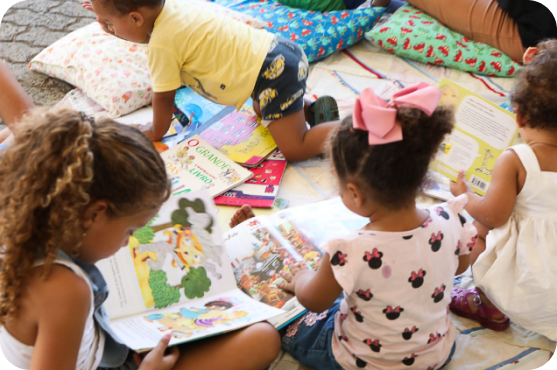
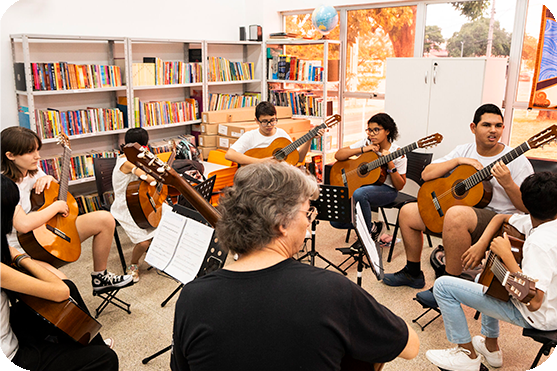
We contributed to consolidating the Cuidar Program, supported the creation of Itu Children’s Committee, and launched the Music and Arts School in partnership with Tomorrowland Foundation. We reinforced our work in Pacajus (in Ceará) and developed new strategic partnerships. In the Amazon, we supported the installation of a community library and promoted training programs for healthcare professionals, public agents and indigenous and riverside communities. In Southern Brazil, we engaged in a project providing therapeutic support for hospitalized children and their families and caregivers.
In 2025, we strengthened our partner network with the online series “Early Childhood in Dialogue”, dedicated to exchanging experiences and good practices. These spaces became opportunities for collective learning, recognition of the role of supported organizations, and the dissemination of innovative practices across different territories. We also launched a research partnership with Unicamp to develop intersectoral indicators for early childhood, expanding the capacity to monitor programs and policies aimed at children’s holistic development. Alongside new strategic alliances, we continue to contribute to the consolidation of public policies and the expansion of initiatives that place early childhood at the center of social transformation.
Early childhood, from pregnancy through age six, is a critical stage of human development. During this period children learn to communicate, think, feel emotions and interact with the world around them, while also building the foundations for health, learning and well-being throughout life.
Investing in early childhood protects and promotes children’s rights and helps them grow into healthy adults. It also promotes sustainable development for society as a whole.
We believe that working in networks and through partnerships amplifies individual action and broadens opportunities for collaboration, connecting actors and initiatives around common goals. Collective structures are also essential spaces for dialogue, as well as for sharing knowledge and experiences. For this reason, we participate in key networks dedicated to promoting and defending the rights of children in early childhood:
Rede Nacional Primeira Infância (RNPI) – National Early Childhood Network; Coalizão Brasileira pelo Fim da Violência contra Crianças e Adolescentes – Brazilian Coalition to End Violence Against Children and Adolescents; Agenda 227; GIFE – Grupo de Institutos, Fundações e Empresas – Group of Institutes, Foundations and Companies
Our work is driven by a model of strategic philanthropy, structured around three core axes that guide our actions and are implemented mainly through grantmaking to partner initiatives.
● Provide financial and non-financial support to civil society organizations and local initiatives;
● Promote training and technical assistance in management, governance, and monitoring;
● Encourage practices that value care, child well-being, and affective bonds, fostering intersectoral action in the territories;
● Expand children’s and families’ access to fundamental rights;
● Care for the physical, emotional, and relational well-being of professionals, leaders, and caregivers;
● Facilitate exchange spaces among supported initiatives, promoting the sharing of experiences and dissemination of good practices;
● Monitor and evaluate, in a participatory way, the actions and projects supported.
● Carry out advocacy and mobilization campaigns on priority issues of childhood;
● Promote training and engagement initiatives with families, caregivers, civil society, and public managers, highlighting the rights and importance of early childhood;
● Take part in movements, networks, coalitions, and initiatives aimed at ensuring and expanding children’s rights;
● Engage with public managers, rights councils, forums, and advocacy networks;
● Collaborate in the development and implementation of plans and public policies focused on early childhood.
● Promote studies, diagnostics, and research on early childhood contexts, in partnership with recognized institutions;
● Systematize experiences, good practices, methodologies, and indicators developed in the territories;
● Value children’s protagonism in knowledge production and evaluation processes;
● Support the training of professionals and leaders, grounded in evidence and local knowledge;
● Publish and disseminate content in diverse and accessible formats and languages, through digital platforms, social media, and printed materials;
● Take part in events, meetings, and conferences, promoting knowledge exchange and strengthening the early childhood ecosystem.
We contribute to transforming the early childhood ecosystem in Brazil in a structured and systemic way.
Explore where we are and the projects we support.
Here you can access all Annual Reports, Audit Reports and other institutional publications.
In line with our commitment to ethics and transparency, these materials include financial statements, agreements and partnerships, established with other organizations and with public authorities, all publicly available for society.