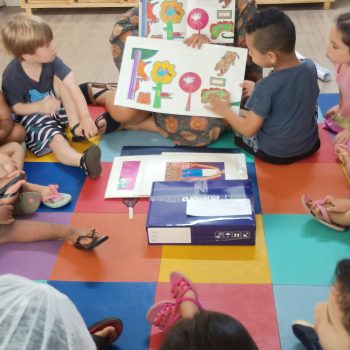
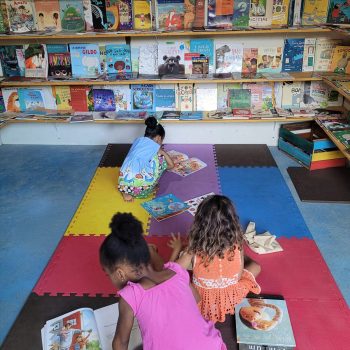
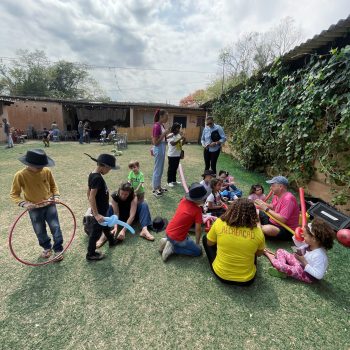
Instituto Tecendo Infâncias was founded with a clear and enduring purpose: to care for young children living in vulnerable contexts and for those who care for them.
We knew the path would not be simple. In a country where inequality is present from the earliest years of life, transforming realities requires time, courage, and genuine alliances. Since 2022, we have worked alongside inspiring organizations dedicated to serving their communities. Together, we have expanded opportunities so that each child has the chance to develop fully.
2025 was a year of consolidation, during which the Institute deepened its identity, strengthened its governance, and expanded its partnerships. This process reaffirmed that our work is sustained by responsible choices, guided by evidence, and shaped through dialogue with those working directly in their communities.
We remain committed to supporting those who work consistently, strengthening practices and policies focused on early childhood. This report brings together stories, evidence, and learnings that show the impact of a network committed to equity and social justice.
My gratitude to all those who supported us, believed in what we do, and worked alongside us in 2025.
Maíra dos Reis Gazzola Schincariol
2025 was a year of encounters and learning. We were present in the communities, and we listened to children, families, professionals, and local leaders. This close engagement with partner organizations reinforced the importance of each initiative and revealed that, despite different contexts, the same fundamental challenges exist across the country, from north to south: ensuring access to quality basic services, strengthening family support networks, and valuing early childhood professionals.
A key milestone was the update to our Theory of Change, based on insights gathered during our first three years. We reinforced our institutional and governance foundations with the addition of new board members to the Board of Directors and the Fiscal Council. We refined evaluation tools and reference frameworks to support ongoing project monitoring and capacity-building efforts. We defined indicators that not only reflect numbers, but also express bonds and qualitative transformations.
This allowed us to better understand the results of each supported project, helping to inspire other organizations.
However, we also faced challenges in 2025. Changes in public administration abruptly disrupted well-established projects from one moment to the next, including those formally backed by municipal legislation. While political cycles are an inevitable part of public life, we remain convinced that once rights have been achieved, particularly those of children, they must be protected and sustained. These situations reinforced our commitment to solutions that can endure over time and across changing contexts.
Despite these challenges, 2025 was marked by the stories that give meaning to our work: mothers who found support networks to better care for their children, professionals who felt recognized in their work, and children who discovered new spaces for interaction, learning, and belonging.
We moved forward thanks to the dedication of our team, the strategic guidance of our Board, the strength of our partnerships, and the commitment of our partner organizations. Together, we have improved our practices and expanded our capacity to contribute to meaningful and lasting changes.
We enter 2026 strengthened by what we have learned and confident in our ability to continue supporting organizations and initiatives in their communities, engaging society and public leaders, and generating evidence that helps inform decision-making across the public and private sectors. It is in this convergence of actions that we see transformation happen, in a concrete and lasting way, within the early childhood ecosystem.
Of the country’s 18 million children under the age of 6, around 10 million live in low-income households, which limits their development opportunities from the beginning of life. Basic conditions such as adequate housing, proper nutrition, and access to healthcare and early childhood education are still not guaranteed for all children.
This situation is further aggravated by alarming data revealed in 2025. The Early Childhood Panorama study, What Brazil Knows, Experiences, and Thinks About the First Six Years of Life, conducted by Fundação Maria Cecilia Souto Vidigal in partnership with Datafolha, found that 84% of Brazilians do not recognize the early years of life as fundamental to human development.
The early years of life are decisive for the future. It is during this period that the foundations of learning, physical and mental health, and the capacity to develop strong emotional bonds are established. Considered a true “window of opportunity”, early childhood is the period during which human development occurs most intensively and rapidly: by age six, approximately one million new neural connections form in the brain every second, and 90% of brain architecture is established during this time. When a young child grows up without adequate stimulation, these impacts accumulate over time and affect society as a whole.
Despite this, the lack of knowledge about this stage remains significant. The 2025 study found that 42% of Brazilians do not know or have never heard of the term “early childhood.” Only 2% of the population correctly identifies it as the period from birth to age six, a figure that increases to 4% among caregivers. This highlights how challenging it is to disseminate reliable, high-quality information even among those living closely with young children.
Article 227 of the Brazilian 1988 Federal Constitution, the Child and Adolescent Statute (Estatuto da Criança e do Adolescente, ECA) of 1990, and the 2016 Legal Framework for Early Childhood (Marco Legal da Primeira Infância) all affirm that children are subjects of rights who are entitled to comprehensive protection from their families, the State, and society, and that this protection must be ensured with absolute priority. Important advances in 2025 further strengthened this legal and institutional framework, including the creation of the National Integrated National Early Childhood Policy (Plano Nacional Integrado da Primeira Infância, PNIPI), established in August through Decree No. 12,574, and the National Early Childhood Information System, established in September through Law No. 15,220. These initiatives aim to integrate data across health, education, and social protection systems, strengthening intersectoral coordination with the participation of civil society.
Despite these important advances, structural challenges persist. Many children still lack access to quality early childhood education, consistent healthcare, and safe places to live. Multidimensional poverty, structural racism, and deep territorial inequalities continue to deepen these violations of children’s rights, particularly in the most vulnerable contexts.
Investing in early childhood means investing in a more equitable and sustainable nation. Evidence shows that every Brazilian real invested during this stage generates long-term returns, including improved health, higher educational attainment, reduced violence, and greater economic productivity. The absence of consistent and well-implemented policies, on the other hand, leads to significantly higher social, human, and economic costs in the future.
This is not only about protecting children today, but about ensuring that Brazil moves towards greater equity, innovation, and sustainable development.
Early childhood requires, at the same time, the immediate guarantee of rights, collective commitment, and long-term strategic investment.
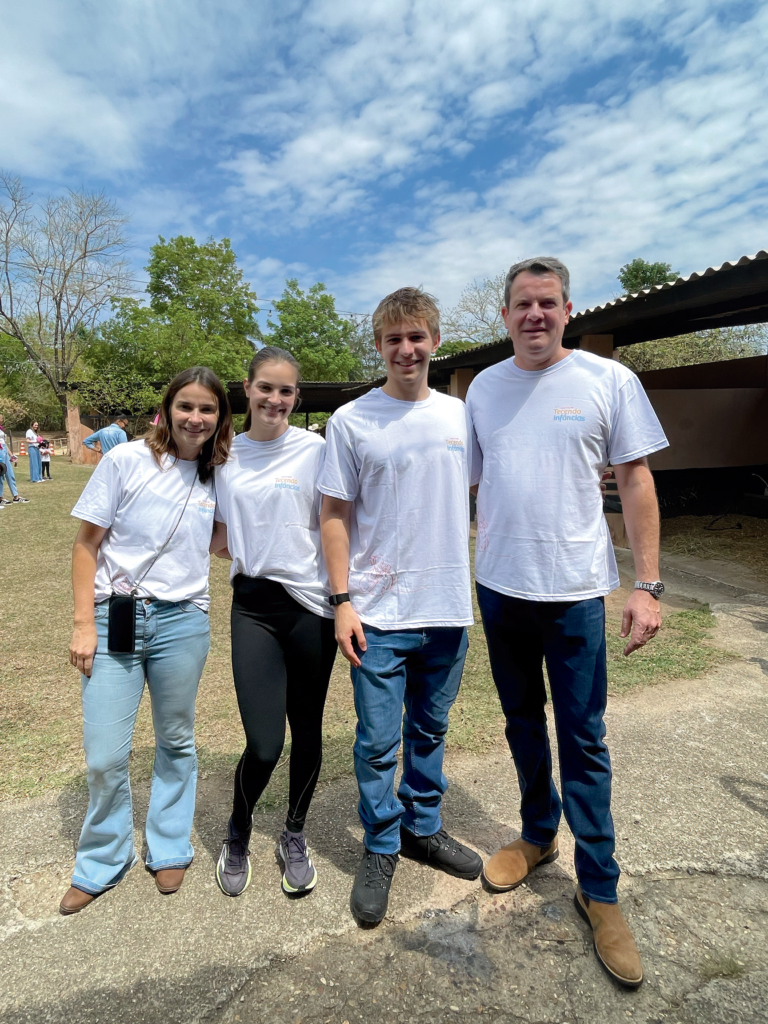
In response to the profound inequality of opportunities among children in Brazil, the founding family, Maíra and Adriano Schincariol, together with Laura and Lucas, chose to transform their occasional philanthropic actions into a structured initiative, with a long-term vision, consistency, and impact.
This resulted in the establishment of Instituto Tecendo Infâncias in January 2022, in Itu, in the state of São Paulo, with the mission of supporting the full development of children in early childhood who live in vulnerable contexts. Since its creation, the Institute has operated through strategic philanthropy. It does not operate its own programs but instead recognizes and strengthens civil society organizations working in their communities, providing financial and technical support, encouraging innovation, and promoting network-building and cross-sector collaboration.
Following a period of in-depth engagement with the social sector and conversations with social entrepreneurs, the family decided to focus on early childhood. This was driven by the belief that the first six years of life are crucial for physical, emotional, cognitive, and social development, and that the vulnerabilities experienced during this period can have a profound and lasting impact.
This commitment is already reflected in projects across different regions of the country, focused on institutional strengthening, qualified listening, and comprehensive care for both children and those who sustain their development daily.
As it marked its third anniversary in 2025, Instituto Tecendo Infâncias reaffirmed its long-term commitment to the early childhood ecosystem, aiming to contribute to ensuring that every child in Brazil has access to their rights and opportunities from the very beginning of life, so they can develop fully.
The Institute does not directly implement programs.
The Institute does not operate its own projects. Instead, it supports and strengthens partner organizations.
It combines strategic grantmaking, technical support, and network-building, acting intentionally and guided by evidence. Through its team, the Institute works closely alongside projects with enthusiasm and collaboration, always seeking structural change and guided by the belief that care is a shared responsibility.
Based on lessons learned over the past several years, the Institute’s Theory of Change was revised through a careful and participatory process. With the team gathered, we listened to partner organizations and engaged with social entrepreneurs and project participants, and we also analyzed leading practices in Brazil and internationally.
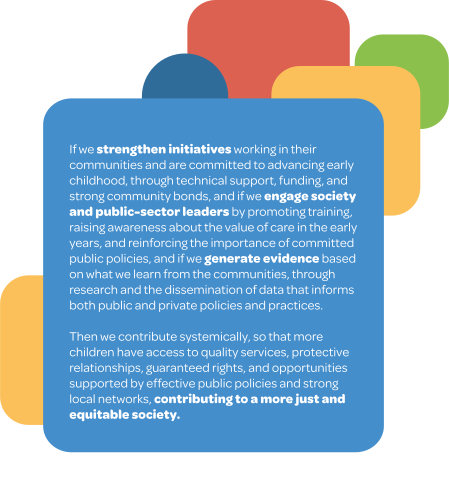
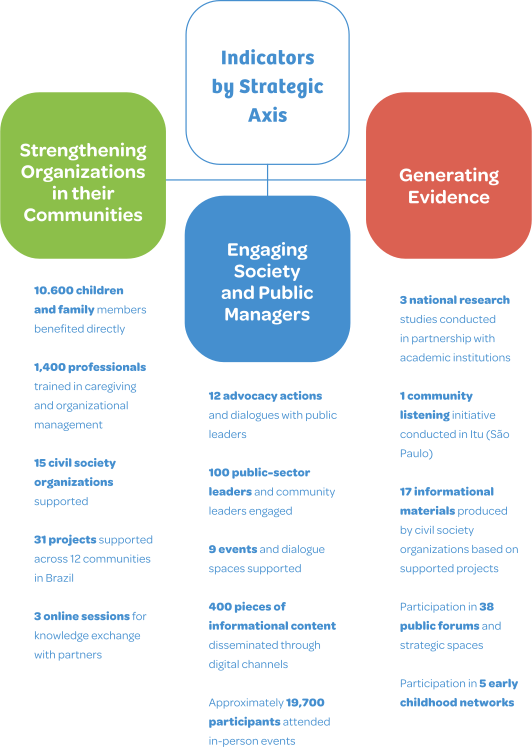
This review consolidated the three pillars that guide Instituto Tecendo Infâncias’ systemic impact approach into a clear and cohesive narrative:
If we strengthen initiatives working in their communities and are committed to advancing early childhood, through technical support, funding, and strong community bonds, and if we engage society and public-sector leaders by promoting training, raising awareness about the value of care in the early years, and reinforcing the importance of committed public policies,
and if we generate evidence based on what we learn from the communities, through research and the dissemination of data that informs both public and private policies and practices.
Then we contribute systemically, so that more children have access to quality services, protective relationships, guaranteed rights, and opportunities supported by effective public policies and strong local networks, contributing to a more just and equitable society.
The update to the Institute’s Theory of Change strengthens its positioning, aligns expectations with partners, and brings greater clarity to the narrative of transformation that guides it. Tecendo Infâncias’ approach goes beyond one-off support; it reflects a long-term, systemic commitment to early childhood.
In 2025, Instituto Tecendo Infâncias invested in strong and consistent initiatives, rooted in their communities and with potential for transformation. The selection of each supported project considered technical criteria, strategic alignment, implementation capacity, social relevance, and sustainability.
Our support goes beyond funding: the Institute works alongside each organization, offering technical support, training, knowledge exchange, and active listening. We value local knowledge and encourage innovative intersectoral practices connected to the real needs of Brazilian children. We help create the conditions for organizations to strengthen their institutional capacity, support their teams, and improve their methodologies.
The projects below highlight initiatives from different regions of the country, each expressing, in its own way, a commitment to a protected and respected childhood, with access to opportunities for development. These experiences reflect the diversity of Brazil, with a presence in capital cities, urban peripheries, rural areas, and Indigenous communities. To ensure consistency across projects, each project was closely monitored through clear indicators, while maintaining the flexibility needed to adapt to local realities.
In all of them, the three strategic pillars, Advance, Engage, and Evidence, are naturally interconnected, bringing together dimensions that reinforce one another: strengthened initiatives generate practices that engage society and produce knowledge; Evidence strengthens these initiatives and informs public policy; and Engage expands reach, legitimizes care, and contributes to more effective public policy.
This logic underpins the Institute’s approach and provides coherence and meaning to the narrative of supported projects.
Throughout 2025, Instituto Tecendo Infâncias aligned its institutional communications, strategic planning, and Theory of Change more closely. All publications reflected the Institute’s distinctive voice: clear, thoughtful, and accessible, while reinforcing the importance of early childhood as a strategic priority within public and social agendas.
Newsletters, technical reports, and digital informational content were developed to expand the visibility of both the Institute’s work and that of its partner organizations. Communications became more intentionally integrated into institutional strategy, strengthening the Institute’s identity, consolidating its institutional positioning, and amplifying the reach and impact of supported initiatives.
In 2025, the Early Childhood in Dialogue series became an important space for collective learning, bringing together partner organizations, practitioners, and institutional partners from across Brazil. These conversations created space for reflection on shared challenges, enabled the dissemination of effective practices, and strengthened collaborative networks across diverse communities.
These meetings strengthened networks, expanded the exchange of practices, and fostered the collective construction of solutions through collaboration, always valuing listening to local contexts and promoting dialogue between community knowledge and scientific evidence.
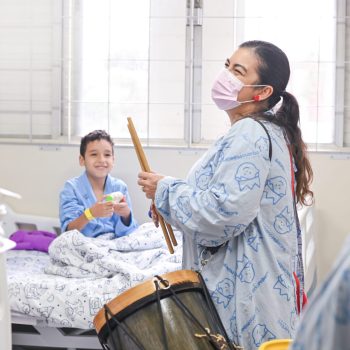
April – Hospital Pequeno Príncipe shared its experiences in responsive caregiving and play as a central pillar of care, reinforcing the importance of quality interactions for child development.
August –Associação Mineira de Reabilitação (AMR) presented strategies for inclusion and interdisciplinary care for children with disabilities, expanding the dialogue on accessibility in early childhood.
December – The CIEDS team addressed atypical early childhood and support for mothers of children with autism spectrum disorder (ASD) and other neurodivergences, sharing experiences from their work with families supported by the project in Pacajus and Horizonte (CE).
These meetings contributed to strengthening networks and expanding the exchange of practices that are transforming the everyday lives of children and families across different regions of Brazil.
In addition to these meetings, Hospital Pequeno Príncipe, in partnership with the Institute, produced thematic brochures and booklets on care, responsive parenting, and listening to families. These materials were distributed through local networks and made available in digital format, expanding access to evidence-based practices. See page 27.
This combination of meetings and strategic materials strengthened the Institute’s role in raising public awareness, increasing mobilization around early childhood, and contributing to greater visibility for the practices and voices of partner organizations.
Over the past year, Instituto Tecendo Infâncias has taken part in strategic spaces for knowledge sharing, strengthening its engagement with academia and key actors involved in the design and implementation of public policies.
In March, for example, the Institute’s Executive Director, Adriane Menna Barreto, participated in the 5th Meeting “The Impact of Women’s Rights on Society,” organized by the Sorocaba School of Law (FADI). Her contribution focused on support networks for single mothers and the effectiveness of public policies aimed at women, highlighting their direct implications for child development. This participation reinforced the Institute’s advocacy for early childhood investment as a foundational strategy to reduce inequalities.
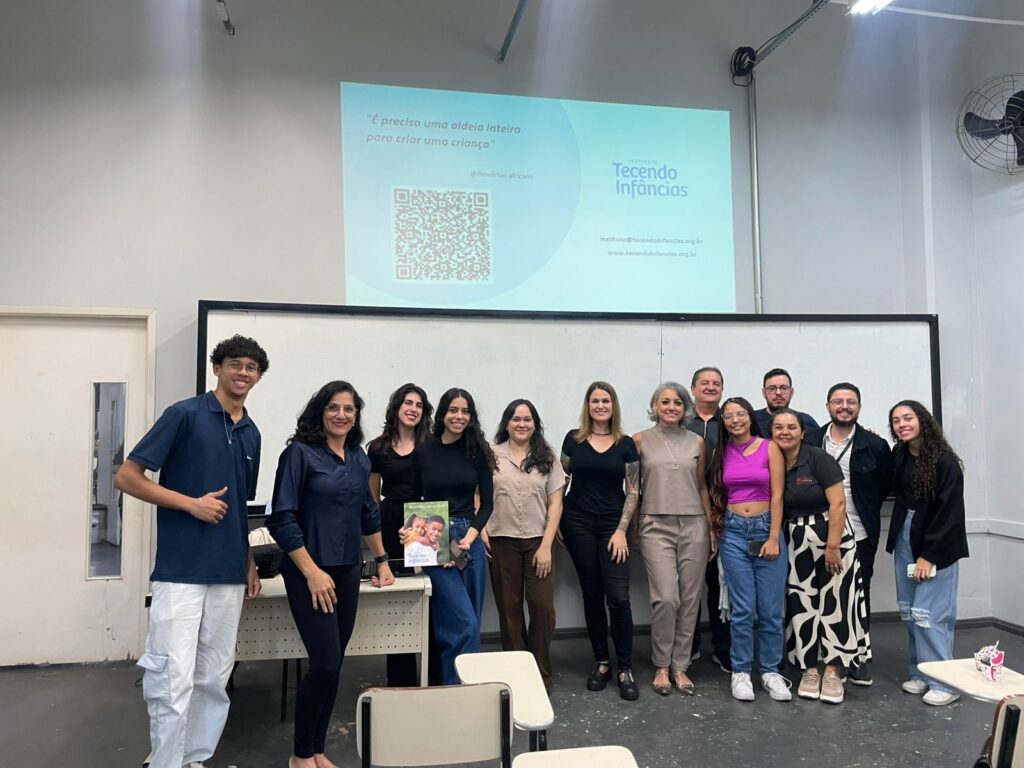
In May, the Tecendo Infâncias team participated as speakers in the event “Maio em Luta,” organized by Centro Universitário Nossa Senhora do Patrocínio (Ceunsp), across its campuses in Itu and Salto, São Paulo. The presentation, titled “Social Determinants and Their Impact on Early Childhood,” created an opportunity to share the Institute’s work across different communities and engage students from fields such as Psychology, Pedagogy, Nursing, Public Policy, and Physiotherapy. The discussion encouraged reflection on the role of professional practice in addressing the inequalities that shape early childhood development and reinforced the importance of intersectoral collaboration, early childhood investment, and stronger connections between academia and civil society.
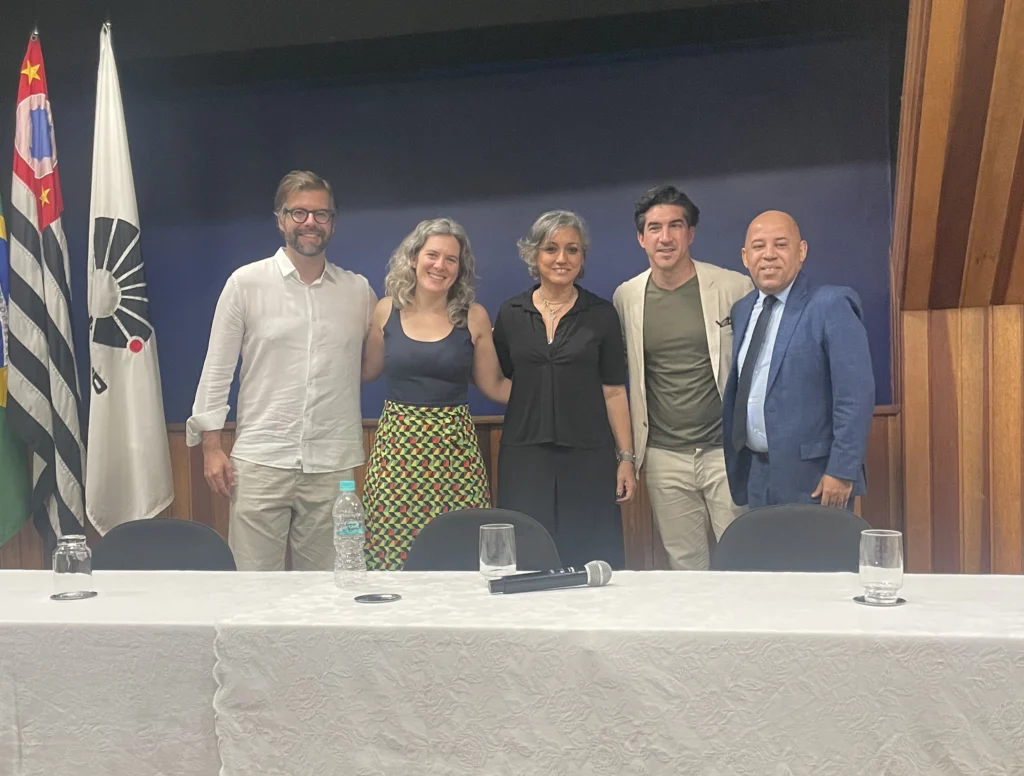
In October, Adriane Menna Barreto participated in a conference at the University of Campinas (Unicamp), presenting the importance of integrating science, practice, and public policy. The lecture addressed the social determinants of childhood and brought together students, researchers, and public-sector leaders. This dialogue reinforced the Institute’s commitment to bridging academia and civil society and to expanding the production and dissemination of applied knowledge in early childhood. Beyond the events in which the Tecendo Infâncias team participated as speakers, the Institute also took part in dozens of trainings, seminars, and discussions organized by civil society organizations, academic institutions, and public sector actors.
Looking ahead to 2026, the Institute remains committed to deepening this strategy by expanding its presence in influential spaces, strengthening cross-sector partnerships, and investing in communication that remains closely connected to communities, scientific evidence, and social priorities.
Throughout 2025, the Institute strengthened connections with different actors and also dedicated attention to reinforcing its internal structures, with new governance and management practices. The changes implemented increased the consistency of decision-making, incorporated greater diversity of perspectives, and reinforced the transparency and integrity of institutional processes.
The Board of Directors met three times during the year, addressing strategic topics such as sustainability, institutional positioning, and support for partner organizations. Two new members joined the Board: Vandré Brilhante and Lilian Christofoletti. Their experience complemented that of the Institute’s founders, who serve on the Board, further strengthening its strategic capacity.
The Fiscal Council was established, fostering closer collaboration with the executive team and strengthening financial oversight and budget management. Leonardo Bortoloto and Dante Catuzzo were appointed as members, both bringing solid experience in financial management and governance.
The Institute maintained a lean structure and worked with strategic partners, such as Rispetto, the founding family’s private wealth management office, under a dedicated agreement for financial management. Throughout the period, an internal audit was conducted, processes were reviewed, spreadsheets and automated reports were enhanced, ensuring greater security, efficiency, and clarity in financial oversight.
The Institute’s organizational culture was strengthened through practices of active listening, participatory planning, and recognition of individual perspectives. The Institute invested in professional development, fostered opportunities for team connection, and cultivated meaningful relationships, recognizing that team well-being is essential to the quality, consistency, and integrity of its work.
Throughout 2025, the Institute developed and implemented new management tools to strengthen organizational structure, enhance monitoring processes, and support more consistent and informed decision-making. These tools included structured models for project planning, technical reporting, financial oversight, and impact monitoring and evaluation.
By standardizing processes and improving data management, the Institute increased operational clarity, strengthened accountability, and reinforced its capacity to monitor supported initiatives. These advances contribute to greater institutional consistency and support the long-term sustainability and strategic growth of its work.
Reference Frameworks: Standardized formats for project planning and quarterly technical reporting were implemented, ensuring greater consistency, comparability, and clarity in institutional relationships.
Monitoring and Evaluation: A proprietary project monitoring and evaluation methodology was developed and implemented, based on six strategic criteria: relevance, implementation capacity, measurability, sustainability, risk, and alignment with the Institute’s mission. The combined use of quantitative and qualitative indicators strengthened the understanding of results, generated valuable insights, and enabled adjustments aimed at enhancing impact.
Governance and Planning: The Institute updated its Governance Policies, strengthening transparency, compliance, and sound management practices. Two key strategic milestones were also developed: the 2026–2030 Strategic Plan and the new Communications Plan, both guided by a long-term vision.
In 2025, Instituto Tecendo Infâncias was awarded the Transparency Certificate, granted by Certificadora Social — an important recognition that attests to the organization’s commitment to ethical management, responsible use of resources, and public access to relevant information about its work.
The certification is the result of a rigorous evaluation process based on criteria that include open access to institutional data, clear communication of results, and transparency in accountability practices. This recognition reinforces the Institute’s commitment to maintaining relationships of trust with society, partners, funders, and everyone impacted by its projects.
No child grows alone. Every step toward equity in early childhood depends on bonds woven across people, organizations, and communities. It is through the strength of these networks that collective transformation takes shape.
Grounded in the conviction that transformation happens through collaboration and strong networks, in 2025 Instituto Tecendo Infâncias strengthened its engagement with civil society organizations, universities, public sector actors, and foundations, expanding the reach of supported initiatives and enhancing its capacity to contribute to public policy.
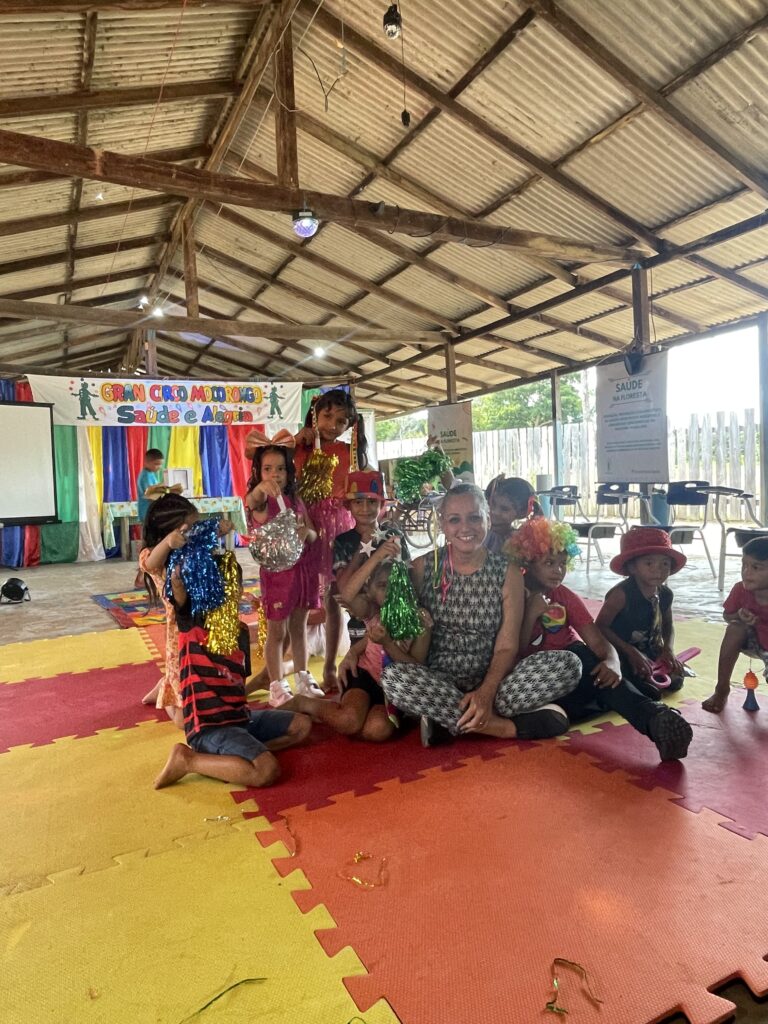
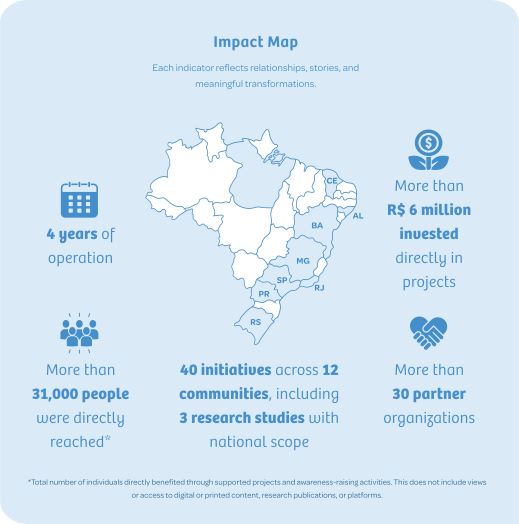
The Institute’s work reached diverse regions across Brazil, from north to south, through projects led by organizations committed to early childhood. This work reflects the geographic and thematic diversity of its efforts, with a presence in major cities, urban peripheries, rural areas, and Indigenous communities.
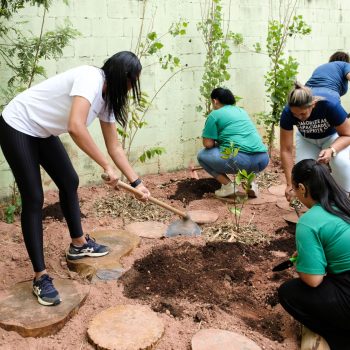
Instituto Tecendo Infâncias established and deepened alliances with institutions such as Instituto Arcor Brasil and Fundação FEAC through the Verdejando Escolas Project, and collaborated with a group of organizations, including Fundação Maria Cecilia Souto Vidigal, Instituto Beja, B3 Social, and Instituto Lemann, as part of the OECD International Early Learning and Child Well-being Study (IELS). The Institute also supported the INSPIRE initiative, led in Brazil by the Brazilian Coalition to End Violence Against Children and Adolescents and backed by multiple funders. These partnerships enabled co-investment in initiatives, the production and dissemination of knowledge, engagement in public policy, and the strengthening of institutional capacity.
In 2025, the Institute continued to benefit from the support of Central Capital, which contributed not only financial resources but also a strategic partnership. This support reinforced the importance of investing in long-term structural impact and contributed to the sustainability and consistency of the supported initiatives.
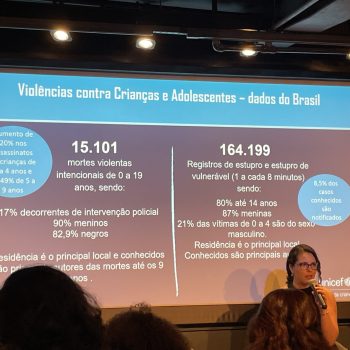
Instituto Tecendo Infâncias is an active member of national platforms that bring together organizations committed to advancing early childhood. In 2025, it actively participated in the National Early Childhood Network (RNPI), the Brazilian Coalition to End Violence Against Children and Adolescents, the Insper Productive Network, and Agenda 227. Through these spaces, the Institute contributed to elevating early childhood on national agendas, strengthening public policies, and advancing collective solutions.
By building bridges and fostering dialogue across sectors, the Institute strengthens an ecosystem of care and equity that sustains and amplifies the impact it seeks to achieve. These connections are an essential part of its approach and continue to guide its strategy in the new cycle.
When we first started thinking about Instituto Tecendo Infâncias, I remember having a very clear concern: would we truly be able to make a meaningful difference in the lives of these children?
I never wanted to do something that would only provide occasional support. From the very beginning, my main concern was that our actions would have a real impact, that they would not be just momentary support, but something that would truly transform the lives of children in early childhood.
This is the stage that shapes everything: trust, security, and the way we see the world. If we take good care of this beginning, we change the entire path.
That is why I have always insisted that we not only support projects but also follow them closely and measure their results. I wanted to be sure that what we were doing was truly generating transformation.
Today, after a few years, we are beginning to see these results clearly. We see children who are more secure, more stimulated, more confident. We see families being strengthened. We see changes that are not temporary, but that truly make a difference in the trajectory of these lives.
As the founder and main financial supporter, I feel a great sense of responsibility. But I also feel immense joy in realizing that we are building something solid, something that generates real impact.
I would like to express my deep gratitude to the entire Institute team, who work with dedication and heart. It is you who makes everything happen every day.
I would also like to thank the Rispetto team, who support the entire structure and provide the foundation that allows the Institute to operate with organization, responsibility, and continuity. This support is essential for us to grow consistently.
It gives me even more motivation to keep moving forward. Because when we invest in childhood with seriousness, commitment, and care, we invest in the future. And that is what we continue to do: weaving opportunities, weaving pathways, and weaving new stories for these children.
Mission-driven investment is central to Instituto Tecendo Infâncias’ identity. In 2025, the Institute strategically allocated resources to strengthen local capacities, expand networks of care, and generate lasting impact in early childhood.
As of December 2025, total cumulative investment reached R$ 7.8 million, including direct support for projects as well as investments in institutional strengthening, communication, monitoring, and governance, always aligned with its three strategic pillars.
Funding draws on contributions from the founding family, co-investment from partner foundations, and strategic alliances. This diversified funding model helps reduce risk, strengthens financial stability, and creates conditions to support innovative initiatives.
For the 2026–2030 cycle, the Institute’s fundraising plan aims to expand its base of funders, deepen relationships with strategic allies, and secure flexible and catalytic funding.
Sustainability is understood as the capacity to sustain impact over time while preserving the quality, integrity, and purpose of the work.
31 de dezembro de 2025
Throughout 2025, Instituto Tecendo Infâncias was strengthened by diverse contributions, thoughtful listening, and decisions firmly aligned with its mission. Partners, supporters, and collaborators helped sustain the care, consistency, and commitment that guide our work.
“The partnership with Instituto Tecendo Infâncias inspires us because it brings together technical excellence, sensitivity in practice, and a commitment to structural results. For us, supporting this work is also a way of investing in a more equitable future.”
Central Capital Team“A prosperous and civic society begins with the healthy early childhood of its citizens. This is the commitment of Instituto Tecendo Infâncias. I am very proud to contribute.”
Vandré Brilhante Board Member, Instituto Tecendo Infâncias“As a mother, and as someone who has followed this project since its beginning, I see clearly that investing in early childhood means changing the course of entire lives. Instituto Tecendo Infâncias demonstrates, through data and concrete actions, that when care is strategic, real impact happens. Supporting initiatives like this is a responsible way to commit to building a more just Brazil from the very start of life.”
Lilian Christofoletti Board Member, Instituto Tecendo Infâncias“I have followed Tecendo Infâncias since its earliest idea, and I am very proud of the work it has been doing to strengthen projects focused on early childhood, especially for children living in diverse vulnerable contexts across the country. An Institute that began by driving the development and implementation of the Municipal Early Childhood Plan in its home city, Itu (SP), and that today works across state borders to create opportunities to reduce social inequalities and ensure rights. Early childhood is a unique stage in every child’s life, and it does not stay in the past. When it is valued and recognized, it transforms futures. This is the mission I see in Tecendo Infâncias.”
Guilherme Gazzola Former Mayor of Itu“Tecendo Infâncias carries out essential activities of protection, guidance, and support for the healthy and holistic development of children in vulnerable situations. This reflects the commitment of its directors, managers, and staff to building citizenship by caring for those in the earliest years of life.”
Prof. Dr. Gustavo dos Reis Gazzola Director, FADI SorocabaThese voices reflect a shared commitment: a network of trust and collaboration, in which each ally contributes to placing early childhood at the center of the decisions and actions that shape the future.
Instituto Tecendo Infâncias closes 2025 with a clear sense of the progress achieved and looks ahead to the next phase with renewed determination to deepen and expand its impact. It reaffirms its commitment to early childhood and its purpose of advancing approaches that have proven effective and meaningful over recent years.
The priorities at the beginning of this new cycle include:
The Institute will remain attentive to local realities, grounded in listening to practitioners and partners and aligned with its Theory of Change. Its strategies will continue to be guided by the three pillars that define its work: Advance, Engage, and Evidence. Dialogue with public leaders, foundations, networks, and universities will also be expanded, grounded in the belief that lasting change is built through collaboration.
We invite all who believe in the power of supporting caregivers, strengthening frontline organizations, and transforming lives from the earliest years to join us on this journey.
“Managing the Institute’s resources means taking direct responsibility for the impact they generate. Clarity in financial processes and decisions is not only a technical requirement but an ethical commitment that builds trust and lends legitimacy to our actions. When management is connected to purpose, it ceases to be merely administrative support and becomes an integral part of the work carried out with communities. Directing investments toward early childhood is a strategic choice that expands opportunities, reduces inequalities, and generates benefits that extend across society. I am proud to be part of this journey and to put my knowledge at the service of something so essential: offering children a fairer start in life, full of possibilities.”
José Luiz Benedetti Administrative and Financial Consultant, Rispetto