
Partner organization
Saúde e Alegria Project (PSA)

Territory / Region
Upper and Lower Arapiuns River regions in Santarém, Pará state, Brazil

Support Period
2024 – 2025
In 2025, Instituto Tecendo Infâncias supported the Primeira Infância na Amazônia Project (Early Childhood in the Amazon), in partnership with Saúde e Alegria Project (PSA), an organization with over 35 years of experience in the western region of Pará and a recognized reference in integrated community development in the Amazon.
The initiative focused on expanding early childhood support in riverine and Indigenous communities in the region, communities shaped by historical inequalities, limited access to health, education, and sanitation services, environmental challenges, and a strong dependence on river transport for mobility and access to essential services.
The project’s activities were structured around two complementary axes:
I. Strengthening Public Policies and Local Capacity, with actions aimed at health professionals, members of the social protection network, public servants, and the Indigenous and riverine populations themselves, promoting training and strengthening local practices.
II. Strengthening Local Care Networks and Practices, through the development of playful materials for health education and the delivery of practical and educational workshops for communities.
Under the first axis, Three Continuing Education in Health (EPS) modules were implemented, covering topics related to comprehensive maternal and child healthcare, including prenatal care, newborn care, monitoring of growth and development, vaccination, routine check-ups, and risk prevention.
In addition, a Training Cycle to Strengthen the Social Protection Network was carried out, with the participation of managers, technical staff, and community leaders who hold strategic roles in ensuring rights and supporting early childhood in Santarém. Representatives from the fields of education, health, social assistance, and protection took part, along with women organized in cooperatives and traditional midwives.
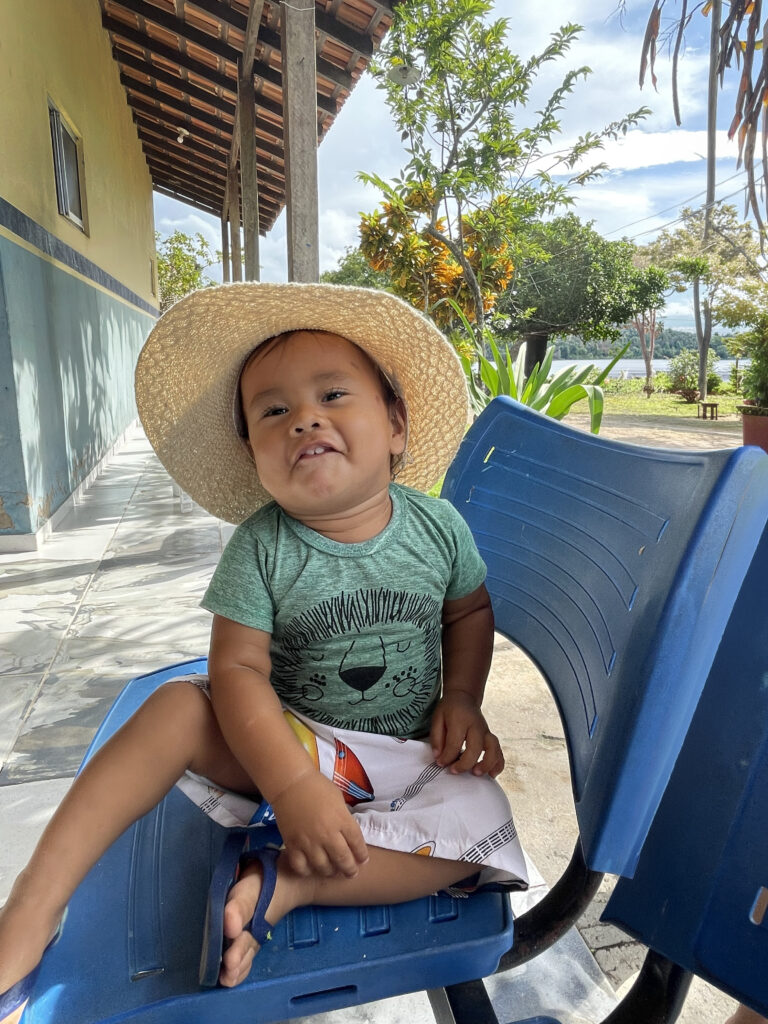
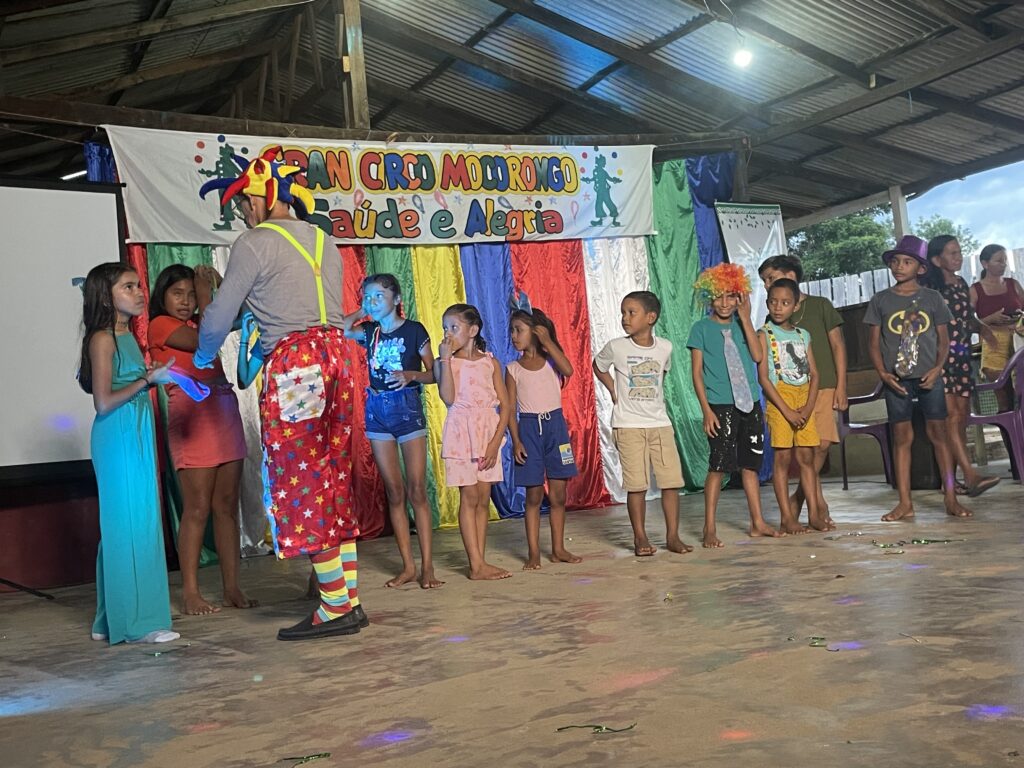
The project team also took part in the Citizenship Support Initiative promoted by the Municipality of Santarém. With support from the Institute, PSA mobilized the “Saúde e Alegria” Boat (a floating health unit), enabling the transport of the service team to São Francisco Municipal School, located in Lago da Praia Indigenous Village. The vessel enabled the travel of approximately 30 professionals, who provided civil documentation, health, and personal care services to the population, with a total of 2,215 services delivered. At the same time, PSA conducted educational and play-based activities with children, addressing topics such as healthy nutrition and the prevention of violence and sexual exploitation of children and adolescents.
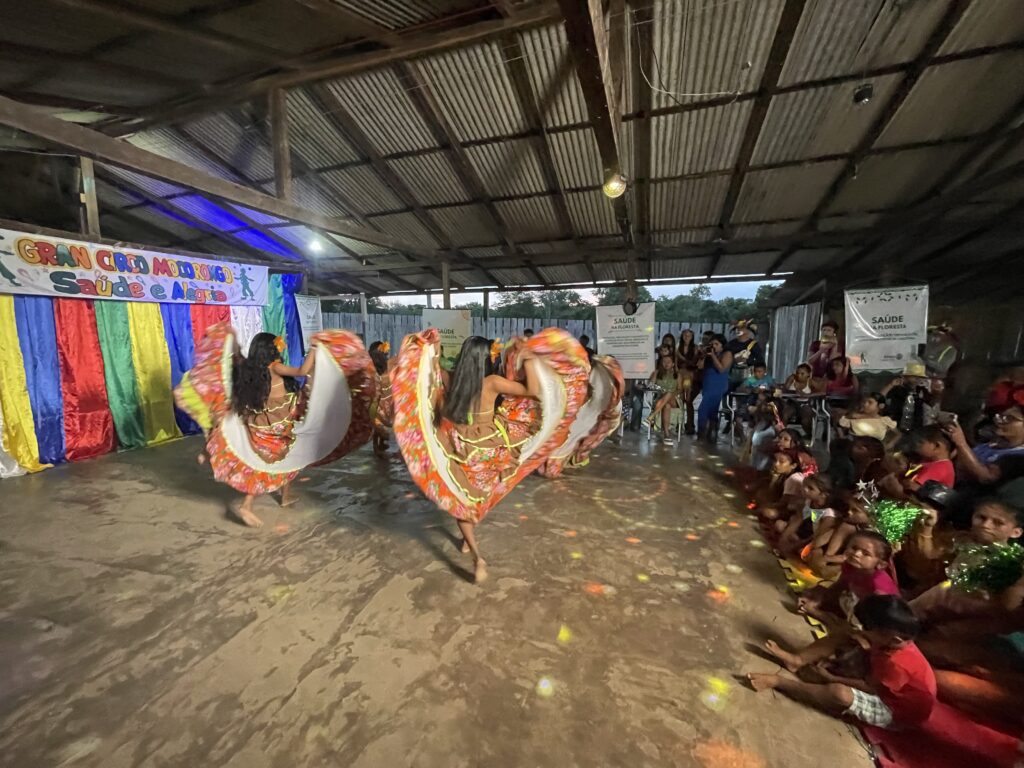
Under the second pillar, five cycles of community health education activities were carried out, combining workshops, consultations, and educational initiatives using participatory methodologies that engaged local agents, community leaders, schools, youth, and organized community groups.
Educommunication workshops were conducted to support the creation of educational materials, alongside social gastronomy workshops focused on healthy nutrition and the appreciation of regional foods. Dialogue circles and community mobilization activities also addressed women’s and children’s health, nutrition, environmental awareness, accident prevention, and early childhood care.
Particular emphasis was given to the “Trilhas da Infância” workshops, which addressed topics such as violence prevention, vaccination, prenatal care, hygiene, and child development, with activities specifically designed for mothers and children up to six years of age. These actions also included medical and nursing services, with consultations, diagnostic testing, and the provision of essential medications.
The project also implemented the Knowledge Exchange Workshop, integrating traditional knowledge and preventive healthcare practices for 23 traditional midwives from the Lower Amazon region. The initiative further encouraged coordination between midwives and Primary Health Care Units, advancing the strengthening of the regional maternal healthcare network.
Across all activities, the documentation and systematization of project experiences highlighted the impact of comprehensive early childhood support for riverside and Indigenous communities, informing dialogue with public leaders and contributing to advocacy for policies focused on early childhood in the Amazon.
With the Institute’s support, PSA strengthened its operational capacity and expanded preventive healthcare, early childhood education, and community mobilization efforts in remote and hard-to-reach areas through innovative river-based logistics solutions. This partnership demonstrates how institutional strengthening, combined with innovation and community-centered approaches, can generate meaningful and lasting transformation, even in regions that have historically been underserved.
“The project is extremely important. In the Amazon, children should be the highest priority, yet the outcomes are not good. When we welcome partners to see the reality in practice, it makes a real difference. It’s hard to fully explain it on paper, in writing. Come here, see what we do, and help us improve. We always need to listen to what communities are asking for and plan our work accordingly.”
Eugênio Scanavino Physician and Founder of PSA